Showing posts with label online class. Show all posts

Why (And How!) to Keep a Writer's Notebook

Wednesday, December 29, 2021
by Leah Claire Kaminski

Open any writer’s notebook and you’ll find a unique ecosystem, populated with lists (of books, birds), quotations, diary entries, overheard dialogue, memories sparked, striking images, sketches, and memorabilia. Some notebooks might even contain actual writing! Ask any writer how they use their notebook, and you’ll get a different answer. Amit Chauduri writes back to front—notes at the back, with the first pages free in case he starts a novel. Carolyn Forché periodically transfers the sparkiest passages from past notebooks into a new one, which becomes dense with poetic possibility.
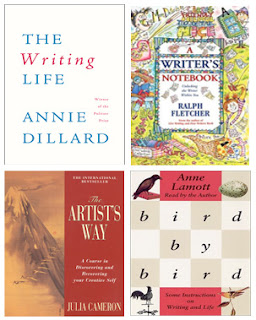
While they fill them assiduously, many writers don’t use all of what goes into their notebooks. Much of what enters my own notebooks never leaves. Joan Didion, who wrote a whole essay on notebooks, said that her old notes “seem marginal at best.” But the list of famous writers who keep notebooks is nearly as long as the list of famous writers: not just Didion and Forché, but Thomas Hardy, Henry James, John Steinbeck, Mark Twain, and on and on. So they must be on to something.

If not as a record to return to, or fruitful ground bearing the rough drafts of their next masterpiece, why do writers keep notebooks at all?

It’s helpful to think of your notebook not as a curated repository for your undiscardable thoughts but as an integral part of a private process: your mind thinking on paper. Novelist Lawrence Norfolk says of his notebook that while it may not be useful in a utilitarian sense, it’s significant because “work passes through it on the way to becoming something else.”

However you use it, your notebook is the surest portal into yourself as a writer. It’s not a library you must keep organized, but a doorway you must keep open, to keep writing vivid and alive in your life.

Convinced? Good. Here’s a few thoughts to get you started in your habit:

The Format:

Sketch book, Word document, or scratch paper? Lined or unlined? I use apps when I must—typing and recording—but I usually use an unlined, softcover Moleskine. There’s a reason most writers use physical journals. “To me, typing is like work,” Neil Gaiman said, while “writing with a pen is like playing.” More scientifically, handwriting (versus typing) can connect us more deeply to our emotions. Virginia Berninger, a professor at the University of Washington, explains that “when we write a letter of the alphabet…that process of production involves pathways in the brain that go near or through parts that manage emotion.”

The Purpose:

Will you write whenever you feel “inspired”? Or create a more consistent practice? Will it be a notebook for brainstorming/project notes (like an artist’s notebook or scientist’s field book—as DaVinci and Darwin famously kept)? Will it be a place to write? Or a place to write about writing (a la John Steinbeck)? Or a brain dump (a la Julia Cameron) on the way to the “real” work? (Mine is a little of all of these, depending on my mood an project.)

The Process:


Can you journal every day at the same time? Or in the same circumstances every time (those free Saturday afternoons while the kids are napping)? Keep your notebook handy for whenever the mood strikes, but also consider an accompanying ritual to help firm up your habit—as simple as a cup of tea and a particular chair, or as complex as drawing a tarot card or speaking a spell.***

***

Leah Claire Kaminski holds degrees from UC Irvine and Harvard. For nearly 15 years she’s taught students to read with attention and to write poetry, academic essays, and creative nonfiction. Leah’s poetry and stories are widely published in magazines and anthologies, and in two chapbooks, Root (Milk and Cake Press, 2022), and Peninsular Scar (Dancing Girl Press, 2018). Her collection Live oak nearly on fire has recently been named a finalist for the Laureate Prize from Harbor Editions and the Paul Nemser Prize from Lily Poetry Review. She’s at work on a new collection, Small Continent of Light, and is also at work on a horror novel. Originally from Miami, Leah lived in Boston and Orange County, California before recently relocating to Chicago with her partner, child, and two cats, Bernie and Betsy. She loves writing, and teaching writing, because the page never judges. Visit her website at www.leahkaminski.com.

Leah is also a WOW! Women on Writing instructor. Check out her upcoming workshop, WHY DO I WRITE?: (Re-)Discover Your Drive, starting January 10th!


Read More »

The Wellspring; Found Poetry

Tuesday, August 14, 2018
by Katherine McCord

One of the most fascinating things I ever read about craft was in Ernest Hemingway’s essay, “On Style.” That guy. I guess I didn’t trust him. He definitely doesn’t come from a woman’s perspective, and he definitely, to me, represents the canon where men dominate in publication and editorship, I’m sorry to say, given the backwards state of things. But we were assigned it in an undergraduate class I took. I had to read it being the good student I was. And I took away something that still rests with me. Well, two things:

1. There are no characters, only people.

In other words, we were to focus less on an intellectually preconceived plot where you want these people to do what you want in the story, because, since they are people, they are—and now Hemingway used a metaphor—they are icebergs.

2. People are icebergs.

In the story you just see a tip, the tip of the iceberg, but what’s in the ocean, the part you never see in the story or novel, has to be there. That person’s full life. What he or she has done and lived and likes to eat—all of it. Again, the stuff never mentioned in the story. But unless you know your “character”/person like that, there is no story. There can’t be. How to get there is the hard part. Some of you will just know this person inside because you carry her history, so that if a person asks you a question about her, you’ll be able to give an answer that isn’t intellectual, but just is. Or maybe some of you will explore the character, be the character, to know. Or maybe some of you will just write and that character’s whole history, her every thought will show itself, the life she’s lived by the way she is in the story.

"The dignity of movement of an iceberg is due to only one ninth of it being above water.” ~ Ernest Hemingway


I think as writers we must study and be a long time to find those moments of grace and I think that’s why we write. Found Poetry is like that. There’s what’s underneath, except your art is a wellspring.

* * *

Want to learn more bout found poetry, and give it a try yourself? Join Katherine McCord's online class, FOUND POETRY: Erasure, Blackout, Cento, Cut-Up, Free Form and Craft Elements (Concreteness, Tone, Lineation, and Dramatic Shape), a six week course starting on Monday, September 3, 2018Early registration is recommended!

* * *

Katherine McCord has two books of poetry—Island and Living Room (prose poems)—a lyric essay memoir, My CIA; a poetry chapbook, Muse Annie; and a literary memoir, Run Scream Unbury Save, that was winner of the Autumn House Open Book Award in Creative Nonfiction. She has published widely in literary journals, such as American Poetry Review. Katherine has an MFA in Creative Writing and an MA in Creative Writing. In 2011 and 2014, she won Maryland Individual Artist Awards (state grants in creative writing in poetry) and has won other awards or placed as a finalist, such as for the Frank McCourt Memoir Prize. You can find out more about her on www.KatherineMcCord.com.

Read More »

Your High School Science Teacher was Wrong (and your creative writing instructor was, too)

Friday, December 15, 2017
by Gila Green

Writers must think about description. A lot.

We're told to paint in words, and to use vivid prose. But there's one piece of description-writing advice we hear most: Five Senses.

What many writing instructors really mean by this is to drop the visual emphasis and dip into sound, smell, taste and touch. Mostly, we're diligent about it. On paper every meal becomes a sensual, olfactory, mouth watering experience, or the opposite: even hot Turkish coffee cannot perk our wilted heroines.

Turns out this old-school advice needs a reboot and this is great news for your writing. There may be as many as seven or twenty-one human senses. There are whole worlds of senses to integrate into our descriptions, and no reason to recycle the same old five page after page.

What about incorporating equilibrioception (our sense of balance) into a character? Magnetoception anyone? This is the ability to detect magnetic fields, which is truly handy when you're trying to get somewhere. There are a myriad of ways these senses can be applied to fantasy, sci-fi, magical, horror or realism.

Is your character oblivious to time? The ability to perceive long vs. short periods of time passing may come from two different parts of our brain, but either way, it's a great sense to manipulate in your writing. Who doesn't have it? What are the stakes? One class participant based a story around it. It was about a couple who longed to move to Mexico because they couldn't fit into their time-conscious American society. Ouch! That brings me to pain receptors that are entirely separate from our overall sense of touch. How about a character with a very high or very low pain tolerance?

Proprioception is yet another sense you may not have heard of. It's the ability to distinguish your body from the rest of the world and move it (i.e., we can scratch our feet without looking because we know where they are). What about a character that lacks proprioception? She can't scratch her back without help. She can't find it.

So, should we ditch the five senses? No. But do add to your writer's toolkit when it comes to description. Even the ones we know can sport a new look. Take smell. Many of us learned humans have a weak olfactory system (compared to dogs or elephants, for example). That's a myth. We can sniff over one trillion scents.

Say goodbye to "my character can only pick up on overpowering smells like coffee and baked bread" and explore this sense without worrying that it's unrealistic or reserved for super powers.

As for taste, sweet, sour, salty and bitter are so yesterday. We have savory (cheese, meat) and maybe even fat and calcium. Scientists are split on that, but we're not. Go ahead. Make your heroine bite into that sandwich and be disgusted or charmed by the fatty sharp calcium taste. It will make your story that much more fresh and delicious to read.

***

Want to make your story come alive for the reader? Join Gila's latest WOW! Women on Writing class: Writing Fiction: Setting and Description, a four week course starting on Monday, January 8, 2018.
Early registration is recommended!

***
Gila Green's  young adult novel No Way Home is forthcoming from Simon Pulse, an imprint of Simon & Schuster. Her first novel, King of the Class was released by NON Publishing (Vancouver, 2013). Her short stories have appeared in dozens of literary magazines in the US, Canada, Australia, Israel, and Hong Kong. Her collection, White Zion, is a finalist for the Doris Bakwin Award (Carolina Wren Press), and her work has been short-listed for WordSmitten’s TenTen Fiction Contest, the Walrus Literary Award, the Eric Hoffer Best New Writing Award, and the Ha’aretz Short Fiction Award. Her short stories have appeared in dozens of literary magazines including Fiction Magazine, Akashic Books, Many Mountains Moving, The Saranac Review, Jewish Fiction, Pilot Pocket Books, The Dalhousie Review and Noir Nation. Please visit: www.gilagreenwrites.com
Read More »

What is Inbound Marketing and Its 3 Core Elements?

Wednesday, August 10, 2016
by Karen Cioffi

Inbound marketing is a collection of marketing strategies and tools that is focused on visibility and attention. Its purpose is to bring readers and potential customers to you and your website.

Sounds great, right? No more hunting them down. They come right to you.

This is the idea behind inbound marketing.

But, how do you do this?

It’s pretty straight forward and there are three core elements to this process.

1. Visibility

The first and most important element to inbound marketing is to generate attention to you and what you’re offering. This is done through:


  • A website
  • Blogging
  • Simple SEO strategies
  • Social media


2. Turn visitors into potential customers / clients.

You need to have certain things in place to turn that visitor into something more.

This is where your call-to-action (CTA) comes in.

You need to have an email service provider. This service will provide you with the opt-in box code that will allow the visitor to input her email address and get onto your mailing list. It’s this list that is key to conversion (the process of a visitor going from reading to buying or some other desired action).

Usually, to motivate the visitor to become a subscriber, you need to offer a great ‘freebie.’ This is your ethical bribe.

To determine what gift your audience would appreciate, think of what you would want. Or, you might ask on your social networks. The freebie needs to be valuable enough and worded right to get people to give you their email addresses.

Just be sure that the new subscriber can quickly and easily get the gift you promised for signing up. This entails creating a Thank You landing page that has the link to the download.

3. Email marketing

Getting subscribers is pretty much the whole purpose of numbers one and two above.

But, once you get subscribers, how do you convert them into customers?

You’ve got to provide ongoing ‘actionable’ content that the subscribers can use in their own journey. It’s this content along with CTAs to your services or products that will eventually motivate conversion.

One of the best ways to take advantage of email marketing is to create an autoresponder of eight to 10 emails that will go out automatically once someone signs up to your mailing list.

These emails should be highly focused on the type of content the subscriber signed up for. Each one should have a CTA, even if it’s to connect on social networks.

There you have it, the three core elements of inbound marketing.

***

Karen Cioffi is a former accountant who is now a multi-award-winning author, ghostwriter, freelance writer, editor, and author-writer online platform marketing instructor. She founded and manages Writers on the Move (a marketing group), and presents online writing and marketing workshops and webinars.

Karen has published 12 writing and marketing eBooks, the most recent, Article Marketing: Increase Website Traffic with Properly Formatted and Search Engine Optimized Content.

In addition to this, Karen’s website, Karen Cioffi Writing and Marketing, was named Writer’s Digest Website of the Week, June 25, 2012.

Want to get more traffic to you and your website? Check out Karen's online class, GIVE YOUR AUTHOR/WRITER BUSINESS A BOOST WITH INBOUND MARKETINGVisit our classroom page for details and enrollment.

Read More »

Top 5 Basic Domain Name Elements

Friday, June 24, 2016
by Karen Cioffi

As an online marketing instructor and ghostwriter, I get students and clients who are just starting out. Just beginning their marketing journey. And, they don’t know the very basics of an effective website or what actions to take to get started.

The very first thing to do, when you’re first thinking about creating your own website or having one created for you, is get a domain name.

The domain name is your online address. It’s where people can find you online.

For example, my content writing site is Article Writing Doctor – that’s the domain name and the website title. The URL (actual online address) is http://articlewritingdoctor.com.

The Key Elements of a Domain Name

1. You want your domain name to be reflective of what your site is about.

Still using my Article Writing Doctor site, the reason I chose that name is because it’s highly relevant to my site’s niche.

If your site is about cooking, you'll want a domain name that reflects that. If I had a cooking site, I might use something like Cooking with Karen. Or, maybe zoom in closer on the niche, Karen Cooks Italian or Italian Cooking with Karen.

Make it as specific and keyword effective as possible. The reason I added "with Karen" is because "Cooking" and "Italian Cooking" are very popular keywords. Chances are the domain name wouldn't be available.

2. You want it to be keyword optimized.

The keywords for my domain name are: article / article writing / writing.

3. Keep it short and clear.

Keep your domain name short and to the point. This is best for both readers, search engines, and your marketing efforts. Shorter works better.

4. Think unique.

Try to make your name unique. Make a list of 5-10 names, possibly using variations. Find one that works and that’s available to use.

5. Choose the most popular ‘ending’ if possible.

There are a number of name extensions or endings for URLs: .com / .net / .org, and so on.

You might think of the URL endings as the same as using Street / Avenue / Drive / Road, and so on. Your home address might be:

123 Smith Street
123 Smith Avenue
123 Smith Drive

Get the idea? And, the most popular domain name extension is .com.

Summing It Up

So, there you have it, five of the basic elements to creating an optimized domain name. If you’re getting ready to take the website plunge, use these tips to create a search engine and reader friendly name.

***

Karen Cioffi is a former accountant who is now a multi-award-winning author, ghostwriter, freelance writer, editor, and author-writer online platform marketing instructor. She founded and manages Writers on the Move (a marketing group), and presents online writing and marketing workshops and webinars.

Karen has published 12 writing and marketing eBooks, the most recent, Article Marketing: Increase Website Traffic with Properly Formatted and Search Engine Optimized Content.

In addition to this, Karen’s website, Karen Cioffi Writing and Marketing, was named Writer’s Digest Website of the Week, June 25, 2012.

>>>Do you have a writer's website? Check out Karen's 5-day online class: CREATE YOUR WORDPRESS WEBSITE TODAY: No Code, No Technical Stuff, No Fuss .  Visit our classroom page for details and enrollment.

Read More »

The Top 3 Social Media No-Nos

Wednesday, June 15, 2016
by Karen Cioffi

At this point in time, most everyone knows the importance of using social media marketing. It’s a powerful strategy that has the ability to bring traffic to your website, boost authority, and build your business.

But, there are certain things you should watch out for. Some of these No-Nos will help you avoid harming your credibility and authority, others will help you boost your visibility.

Here are the top three social media No-Nos:

1. Not using social media as part of your marketing.

I’d be surprised if you’re not already doing this, but if not, you must be a part of social media networks in order to create and broaden your visibility and bring traffic to your website.

Join the biggies, like Facebook, Twitter, GooglePlus, Pinterest, and so on. I also use StumbleUpon and LinkedIn. There are lots and lots of them. Find a few that work for you and start sharing on them.

Then find the one or two networks that work best for you and ‘work’ them by posting to them more and engaging with other users more.

Be sure to use social sharing buttons on your blog posts. As you publish each post, share it to your networks. And, be sure to share the posts of other users. This helps create the engagement I mentioned above.

2. Promoting too much.

If you’re primarily promoting your products or services, this is a NO-NO. People want to be informed, they want you to help them. They don’t want to be sold to.

There’s a 80/20 marketing rule: Provide your audience with 80% useable information and 20% promotional content.

In fact, there’s so much information online that I think a better rule would be the 85/15 or 90/10 rule. Make yourself the go-to person for the information your audience is looking for. Then slip in the promo for the product or service that will help ease their pain, build their business, get them healthier, make them money or other solution to their problem.

Make it about your audience.

3. Using link-bait.

Okay, first let me explain what link-baiting is: It’s the practice of creating titles and links that are used specifically to get traffic to your website.

If the content (website) you’re sending the traffic to isn’t relevant to the ‘hyped up’ title, this is a NO-NO. Or, you may be sending people to outdated content or to fluff pieces (no substance or value).

People don’t like this and it will affect your social standing and authority.

Use these tips to help boost your results.

***

Karen Cioffi is a former accountant who is now a multi-award-winning author, ghostwriter, freelance writer, editor, and author-writer online platform marketing instructor. She founded and manages Writers on the Move (a marketing group), and presents online writing and marketing workshops and webinars.

Karen has published 12 writing and marketing eBooks, the most recent, Article Marketing: Increase Website Traffic with Properly Formatted and Search Engine Optimized Content.

In addition to this, Karen’s website, Karen Cioffi Writing and Marketing, was named Writer’s Digest Website of the Week, June 25, 2012.

>>>Want to get more traffic to you and your website? Check out Karen's online class, GIVE YOUR AUTHOR/WRITER BUSINESS A BOOST WITH INBOUND MARKETINGVisit our classroom page for details and enrollment.

Read More »

Creating Content - 10 Online Repurposing Formats

Monday, March 14, 2016
Creating Content - 10 Online Repurposing Formats

by Karen Cioffi

While your blog post should be valuable, it also needs to ‘pack a wallop.’ It needs the ability to be repurposed.

Repurposing content has been around a while, but isn’t always used to its fullest potential. According to Jeff Herring, the highest paid direct response internet marketer, there is a psychology to repurposing, it’s “the ability to look at one thing and see many things.”

It may be turning a blog post into a video, a product, a script for TV. The ideas can keep going.

To make the most use out of your marketing time, this is the strategy you should invest in. Don’t let an article simply be an article – repurpose that article.

Creating Content: 10 Online Repurposing Formats:

1. Expand on your article and turn it into a report that you can offer for freebie for your subscriber list opt-in.

2. Take bits of your content and tweet them throughout the month.

3. Create a podcast.

4. Combine a bunch of articles on a particular topic and turn it into an ebook.

5. Turn your ebook into a live chat workshop. After the live event, you can copy and transcribe the chat – then combine the transcript with the ebook for a combination product.

6. Turn your ebook into a live teleclass. Record the teleclass for more repurposing.

7. Turn your ebook into a live webinar. Do the same as with the teleclass, record it.

8. Turn your ebook into an ecourse. This content format is a good way to get subscribers – those interested will need to sign-up to your mailing list to get the course. Or, you can sell it.

9. Query radio hosts. Most radio hosts are always looking for guests with information to offer their listeners. Offer to be a guest and present your content.

10. Create a video and upload it onto YouTube.

TIP: Be sure to upload any Youtube video you have onto your own site also.

Creating content and having it in so many formats widens your potential customer base. Think about it, some people like to read, others love watching videos, some like the instructional format of teleseminars or webinars, and those pressed for time would rather listen to content while driving or exercising.


Remember that any information you’re sharing should have a clear call-to-action in it. Let the reader know what you’d like her to do: subscribe to your mailing list, buy what you’re offering, or other desired action.

Karen Cioffi is a former accountant who is now a multi-award-winning author, ghostwriter, freelance writer, editor, and author-writer online platform marketing instructor. She founded and manages Writers on the Move (a marketing group), and presents online writing and marketing workshops and webinars.

Karen has published 12 writing and marketing eBooks, the most recent, Article Marketing: Increase Website Traffic with Properly Formatted and Search Engine Optimized Content.

In addition to this, Karen’s website, Karen Cioffi Writing and Marketing, was named Writer’s Digest Website of the Week, June 25, 2012.

******************************************************************************
Join Karen's online class, BECOME A POWER-BLOGGER AND CONTENT WRITER IN JUST 4 WEEKSVisit our classroom page for details and enrollment.

******************************************************************************

Read More »

Crash! Crunch! Cabang! Where have all the Literary Devices Gone?

Wednesday, December 16, 2015
by Gila Green

Writers are forever hearing they need to improve their writing skills. No matter what we produce and how frequently, there’s always some well-meaning editor, fellow writer or classmate hinting that you can never learn enough about writing.

Interpret that as you wish. Perhaps, you see great writing as an exercise bike you need to ride forever, or like a sink in which dishes grow (if it’s anything like my kitchen sink). Either way most of these messages are downers.

The answers we’re given repeatedly once we ask that inevitable question—How does a writer improve her craft?—are often framed as more of a chore than a bowl of cherries.

No doubt you’ve read that writers have to be voracious readers, readers so starved for reading material that only the dry end of a book cover or sharp end of a kindle is true nourishment. Food is blasé in comparison, simply providing enough fuel for you to swallow the next page.

The other most common response I’ve read to this question of how to improve your writing is to simply write. Write we are told! Even if your words are headed for the trash, eventually the cream will rise to the top, the garbage will fall to the dregs, either metaphor, the route to victory is to produce yet more writing.

Number three on my list of most popular advice is to review grammar and sentence structure, to shake the cobwebs off of an old Strunk and White’s Elements of Style and commit it to memory.

All of this advice has some merit.

But never do I read what I think is equally good advice (if not better, OK, I think it’s better): brush up on your literary devices. Yes! It bears repeating: brush up on your literary devices.

There are a variety of reasons why this is my number one, though far less popular answer. I’ll give you three here. First, they are fun. When you are having fun and enjoying the writing process, you will automatically improve your writing. Your mood and enjoyment will sizzle onto the page. It’s fun to attempt an alliteration (repeated consonants). Try it right now. Here’s my stab: “They appeared chained to their chairs, like anesthetized chimpanzees.” Pure amusement.

What is more merry: memorizing the difference between its and it’s or manipulating onomatopoeia into a sentence? Ker-plash! The wet towel smacked him in the face. Crunch! Uh oh. What did she just sit on? That has to motivate you to write better far more than reading about evil adverbs for the umpteenth time. I had to stop myself from adding another example because let’s face it: boing, snort, plop, plop, fizz fizz are fun to write.

Then there’s one of my favorite literary devices: description. Consider how delightful it is to experiment with vivid verbs. The bus bleated for the passengers to board, instead of the usual honked; or she melted onto her chair, instead of sat down. Is it possible that this might encourage better writing and be just as effective as reading every genre, including the telephone directory or writing, possibly for years, until your best works jumps out at you or doing another spellcheck? Absolutely.

There are so many literary devices to choose from; even a quick review should jazz up your work in no time.

***

Canadian Gila Green moved to Israel in 1994. Her novel King of the Class was released in April 2013 by NON Publishing, Vancouver. Her stories and articles appear in tens of literary magazines in the U.S.A., Canada, Australia, Israel, UK and Hong Kong. Her collection, White Zion, is a finalist for the Doris Bakwin Award and her work has been short-listed for WordSmitten's TenTen Fiction Contest, the Walrus Literary Award, the Eric Hoffer Best New Writing Award and the Ha'aretz Short Fiction Award. Gila has an MA in Creative Writing and an undergraduate journalism and English literature degree. Please visit: www.gilagreenwrites.com


*****

Join one of Gila Green's upcoming online classes!


Visit our classroom page for details and enrollment.

*****
Read More »

Social Media Marketing - 5 Must-Know Tips to Getting Started

Wednesday, December 09, 2015
by Karen Cioffi

Most business owners have some kind of social media marketing in place. This is true for big business, small business, and home businesses.

But, if you haven’t really gotten your foot in the door, below are five steps to get an audience going.

1. Open an account in social networks you think will work well with your business.

There are lots of networks to choose from. A couple of the biggies are: LinkedIn, Twitter, Facebook, GooglePlus, and Pinterest.

If you’re an author, you might create an account in JacketFlap and Author’s Den, and Goodreads. And, don’t forget to create an Amazon Author Profile.


2. Once you open the accounts, create a focused profile.

I work Twitter primarily and I see the craziest profile descriptions. Ones that give me no clear idea what the users’ intent or focus are. So, when you’re creating your profile imagine landing on it for the first time. What does that profile immediately say about you and your brand, your platform, your business?

People are in a rush. They need to instantly get the gist of what you’re about and what you’re offering.

You can check out my Twitter profile at: http://twitter.com/KarenCV

3. You absolutely, positively need a Profile image.

As surprising as it may seem, I still see social network profiles with generic avatars or ‘cute’ images of an egg, a pet, or a cartoon. This is crazy. If you don’t take the time to make your profile look somewhat professional, which must include a profile header or business logo, guess what, visitors will take note. Guaranteed you won’t be taken seriously.

Always consider the ‘time element.’ Your profile must be focused – mean and lean.

4. The social network header area is another must do.

Think about this one. You land on a profile that has a focused header and you land on one that has the generic default header, which would appear more professional. Which account would you feel would provide more valuable postings or offer more professional services?

Even if you’re on a tight budget, you can get a great header for $5 over at Fiverr.com.

5. The description

Your description will give the reader a quick gist of what you’re about, what you’re offering, and what your qualifications are.

Write tight and make it easy to understand.

Your profile description, the hashtags, and the header should all be highly focused.

Along with these five tips, don’t forget to post quality content on a regular basis and be active on your networks.

Karen Cioffi is a former accountant who is now a multi-award-winning author, ghostwriter, freelance writer, editor, and author-writer online platform marketing instructor. She founded and manages Writers on the Move (a marketing group), and presents online writing and marketing workshops and webinars.

Karen has published 12 writing and marketing eBooks, the most recent, Article Marketing: Increase Website Traffic with Properly Formatted and Search Engine Optimized Content.

In addition to this, Karen’s website, Karen Cioffi Writing and Marketing, was named Writer’s Digest Website of the Week, June 25, 2012.

***********
Join Karen Cioffi's upcoming online class, 

GIVE YOUR AUTHOR/WRITER BUSINESS A BOOST 
WITH INBOUND MARKETING: 
Basic Website Optimization Tips,
Blogging Smart, Email Marketing,
and Social Media Marketing

Visit our classroom page for details and enrollment.

**********
Read More »

With All of Your Senses

Wednesday, October 07, 2015
by Bernadette Geyer

One of the best ways to experience a place is to be there. Outside of that, reading a wonderful collection of poems, or a work of prose, has the ability to convey a wealth of sensory information about a place. By stimulating all of a reader’s senses – not just one or two – you can captivate a reader and help them experience a place.

Consider how you experience a place. How do your senses shape your experience? Let’s look at some ways of writing about a place that can evoke all of the senses.

1. Sight – Details about what can be seen at a place are very important. Use details that set “this” place apart from “other” places. There isn’t just “a bridge” across “the river”. What type of bridge? A covered wooden bridge? A steel suspension bridge? Which river? Is it a wide river, or a river suffering through a drought?

2. Sound – Think about the layers of sound in a place. There is the layer that is most obvious, such as car engines, or helicopters flying overhead. Then there is the layer that is hidden by the louder layer. Are there children playing in a courtyard? Voices in the next room? Details here are also important as you may not want to simply convey that there are “voices,” but that these are the voices of two businessmen having a heated discussion about a project. You may not just hear children “playing,” but you hear the sound of a ball being kicked against a wall while a baby cries.

3. Smell – Is there a smell particular to the place you are writing about, such as a Maryland beach boardwalk with the smell of fresh fish and Old Bay Seasoning? Perhaps you are writing about a summer fair and the smells of cotton candy, funnel cake, and sweaty children. In the town where I grew up, we could tell when the steel mills were operating because the stench of sulfur was nearly impossible to escape.

4. Taste – Sometimes, how a specific food tastes is highly dependent on the place where it is being eaten. For instance, how would the taste of a hot dog from a baseball park vendor differ from the taste of a hot dog at a backyard cookout? Or the taste of a hot dog that’s been steeping all day in an iron pot full of sauerkraut at an Oktoberfest event in Bavaria?

5. Touch – Even the feel of a windowsill as a character rests her hand on it will differ due to place. Following a dust storm in Tel Aviv, everything exposed to the outdoors is coated with a fine layer of dust. The windowsill of a cabin in the woods may be sticky with sap from the evergreens around it.

There are many ways to describe a place in your writing. These are just some of the examples. By considering how you would describe your environment to someone else, you will also be more attuned to the wonders of the unique space that you inhabit at this moment.

***
Bernadette Geyer is the author of a full-length poetry collection, The Scabbard of Her Throat, and a poetry chapbook, What Remains. She is the recipient of a Strauss Fellowship from the Arts Council of Fairfax County (Virginia, USA) and was a finalist for the 2011 Brittingham and Pollak Prizes. Geyer has served in the past on editorial boards of an independent press and literary journal, and has led workshops for The Writer’s Center in Bethesda, Maryland. She lives in Berlin, Germany, where she works as a freelance writer, editor, and translator. Her web site can be found at http://www.bernadettegeyer.com.

******************************************************************************

Join Bernadette's upcoming online class, WRITING ABOUT PLACEwhich starts on October 26, 2015. Visit our classroom page for details and enrollment.

******************************************************************************
Read More »

Want to Increase Your Subscriber List? 4 Power Strategies to Get You There

Thursday, September 17, 2015
by Karen Cioffi

Everyone marketing, including writers and authors, is looking for ways to get ‘more bang’ out of their blogging efforts. In other words, getting more visitors to click on their subscriber opt-in box.

Well, while the most important factor is to create great content, there are other strategies you can use to boost your conversions (clicks to subscribe).

4 Power Tips to Increase Your Subscriber List


1. Social proof

Social proof is powerful. It’s using screen shots, comments from others, and so on to show that others find your content valuable.

People are motivated by what others like. Adding a Tweet by someone who said your post was great, provides social proof that you’re worth reading. Including an image of a favorable Facebook or Google+ comment lets the visitor to your blog quickly know that others value what you write.

It could even be a screenshot of being on Google’s First SERP or an analytics page that shows you’re getting lots of traffic.

All this is social proof that your content is worth reading, that you have authority. This will help motivate the reader to say YES to your CTA.

2. Powerful website headers with subscriber opt-ins

Along with having a ‘professional looking’ header on your website. There are WordPress themes that come with a ‘widgetized header’ (having special space to input the code for an optin). This is a powerful feature. It’s one of the first things the visitor to your site will see and it’s proven to increase conversion.

3. Moving Call-to-Actions

This type of call-to-action (CTA) comes in at least two different forms. There is the pop-up CTA that pops onto your screen a few seconds after you land on a site. Often, these CTAs block the view of what you were reading.

There is also the slide-in CTA. The slide-in isn’t as intrusive or annoying as the pop-up, as they slide into your view from the right. And, they don’t block your entire view.

Marketing research shows that both these moving CTAs convert, so it’s certainly worth testing out.

4. CTAs at the bottom of each post

I’ve been doing this for quite a while now. It’s an excellent strategy. The reason it’s so powerful is after the visitor reads one of your knock-out articles, there’s your CTA to subscribe. It’s right there, front and center.

It’s important with this strategy to have a ‘freebie offer’ that’s relevant to the content the visitor just read.

Using these four fresh email marketing strategies should definitely help increase your subscriber list. Try at least one today.

***

Karen Cioffi is a former accountant who is now a multi-award-winning author, ghostwriter, freelance writer, editor, and author-writer online platform marketing instructor. She founded and manages Writers on the Move (a marketing group), and presents online writing and marketing workshops and webinars.

Karen has published 12 writing and marketing eBooks, the most recent, Article Marketing: Increase Website Traffic with Properly Formatted and Search Engine Optimized Content.

In addition to this, Karen’s website, Karen Cioffi Writing and Marketing, was named Writer’s Digest Website of the Week, June 25, 2012.

***********
Join Karen Cioffi's upcoming online class, 

Learn to Write Professional, Properly Formatted, and Optimized Content 
as the Basis of a New Freelance Writing Business 
or to Add to Your Existing Services.

Visit our classroom page for details and enrollment.

**********
Read More »

Meet Flash Fiction Runner Up, Linda McMann

Tuesday, August 25, 2015
Linda McMann is a 60-something retired pharmacist who spent most of her working life in pharmacy management at a large Portland hospital where she wrote many newsletters, evaluations, and memos. Her move to creative writing started with a retirement goal of writing a short story for each of her eight grandchildren. After multiple on-line writing courses, conferences, and seminars, she now posts short stories, poems, bits about daily living in Warren, Oregon, and chapters from her current work in progress on her writing blog http://Parrot-Writes.blogspot.com. Please stop by for a visit and leave a comment.

She is currently marketing her second novel, Counterfeit Chemistry, a contemporary romantic suspense story about a young divorced woman who uncovers a counterfeit drug operation in her small town, and when she tries to identify and expose the people involved, finds her life and her son’s life in danger. Her WOW entry winner is the prologue to this novel. She is three-quarters of the way through its sequel, When We’re High, about a family dealing with meth addiction and its connection to identity theft.

When she’s not writing she can be found working with her husband in their small vineyard, taking care of the gardens around their two-acre lot, traveling to Northwest car shows in her husband’s latest hot rod project, or enjoying the company of her eight grandchildren.

She thanks the organizers of the WOW contest and agent Stacy Testa for choosing her story as an award winner this quarter.

***

WOW: Congratulations on placing in the top ten in our Winter 2015 Flash Fiction competition! What inspired you to enter the contest?

Linda: I was introduced to the WOW blog and writing contests by another writer friend and have been a devoted follower ever since. I've submitted multiple contest entries over the past several years and I appreciate getting helpful feedback for a few dollars more. My entry for the Fall 2013 contest ("Hank's Reveal") made it to the honorable mention list, so I've kept submitting stories. I'm excited to have placed in the top ten this time. Next goal: in the top three!

WOW: Keep submitting! Can you tell us what encouraged the idea behind your story, “Counterfeit Chemistry,” which is also the prologue to your novel?

Linda: I combined two pieces of advice I've received about writing in this novel: write what you know and write what you like to read. I'm a retired pharmacist who enjoys reading romantic suspense novels (Nora Roberts, Linda Howard, Jude Deveraux.)

I'm concerned about the rise of counterfeit drugs being sold to the public. I was inspired to write this novel to show the dangers of purchasing drugs off unknown internet sites. The counterfeit drug industry is a $40 Billion international criminal enterprise and growing. I've found no other novel with this story line and am hoping the people who read this novel will wonder if this could happen to them and be more diligent about their medication purchases.

WOW: We’d love to know more about your writing routines. Could you tell us when and where you usually write? Do you have favorite tools or habits that get you going?

Linda: I share a home office with my husband and find mornings are my best time to write. I'm also learning to use Scrivener (writing software for novelists) which seems to help me stay organized. I enjoy participating in NaNoWriMo; it's the perfect motivator to get me back in the seat, writing daily, after a busy summertime of off-and-on writing. The goal of 50,000 words in a month requires me to set daily goals and this carries on after the month is over. I've started three novels and finished/revised two of them during NaNo, and will be at it again this November finishing the last quarter of my third novel.

WOW: You mention that you’ve taken multiple online courses as part of your writing education. What were the main benefits of the classes you took, and how did they help your writing?

Linda: I've taken nine online writing courses through our local community college. The content of the courses has been extremely helpful and the relationships built through the classes have provided a great network of like-minded writing friends who help with critique and commiseration. The first class, "Beginning Writers Workshop" was a perfect starting point and instilled the enthusiasm and excitement I still feel as I write today. Other courses have been specific to romance writing, mystery writing, children's writing, and descriptive writing, editing, and publishing.

Another person who has been extremely valuable to me is Larry Brooks, author of Story Engineering, Story Physics, and www.storyfix.com. I've attended several of his workshops and follow his principles of story structure, which help with the evolution of the story. He's shown me how to identify the concept, theme, premise and to find the core story which guides me as I write.

WOW: You've inspired us to keep up our writing education! Thanks so much for chatting with us today, Linda! Before you go, can you share your favorite writing tip or advice with our readers?

Linda: When I sit down to write, I read the last two chapters to get me back into the time and place of the story (and I try not to revise them.) If I'm having trouble with dialogue, I read it out loud. It's amazing what you can pick up by hearing it spoken. Probably the best advice is to find a teacher that resonates with you (via books or lectures), read and learn as much as you can from them, and then sit down and do it: write, write, write!

***

 For details about our quarterly Flash Fiction contestvisit our contest page

Read More »

How Blogging Connects Authors with their Target Readers

Monday, August 24, 2015
A following of targeted readers curated from blogging isn't built overnight. It’s a long term strategy and takes a great deal of effort, time and planning. Authors need to be reminded of the benefits of blogging from time to time, because they aren't always convinced that someone is reading their blog somewhere in the world.

There’s no magic recipe for hunting down target readers, but lots of evidence in this post proves that blogging increases online visibility as well as sales, and is the hallmark for showcasing one’s expertise.

The strategy itself is simply a combination of deciding on a niche or topic, aligning the content of your posts to suit your chosen topic and niche, and finally, developing a strategy to strengthen your blogging efforts and platform.

Based on tried and true experience, these strategies will help build a following of devoted readers over time:
1. Niche blogging. Your target reader is reading other noteworthy blogs on your topic and perusing forums and threads connected to your topic. That’s why it makes more sense to blog the topics focused on your niche. This is a good way to set yourself apart in such a competitive and crowded writing marketplace. 
2. Strategy for blogging your book. Once you have a clear idea of what your book is about, it’s time to blog it. There are many ways to blog a fiction or non-fiction book. One popular way is to gather a list of themes and lessons that can be supported with excerpts from your book.
For example, the niche topic for my memoir about leaving New York City to serve in the Israel Defense Forces fits in perfectly with transformation type blogs, because of the running theme of courage and leaving one’s comfort zone. One blog post focused on the 7 Courage Scenes that didn’t make the cut for my memoir Accidental Soldier. Another post focused on how to have the courage to make life changes – either extreme or minor.
3. Guest blogging. Once you’ve determined your niche and topics, as well as keywords and brainstormed a list of potential blog posts, the next step is finding guest blogging opportunities. These exist everywhere, but the key is finding the right ones that dovetail with your niche. Like anything, the key is to start small. I gathered six different guest blogging opportunities just by asking on my Facebook wall.
The challenge of course for any author is to maintain consistency over time. How does one stay focused, with patience, faith, self-confident and productive – in short, to “stay the course?” When you have a plan to stay accountable as indicated in the course I’m teaching Blog Your Fiction or Non-Fiction and Reach Your Target Readers, you can in fact, remain focused for the long haul.

***
Dorit Sasson is the founder of the Giving Voice to Your Story website and global radio show. Her mission is to help authors and entrepreneurs give voice to their stories and the powerful messages that lie within their book by blogging as an engaging way to build their platforms. As a memoirist, blogger and copywriter, Dorit models vulnerability and authenticity that help break down barriers and allow others to weave their stories with content. Dorit is a regular contributor to the The Huffington Post. Her cultural memoir, Accidental Solder: What My Service in the Israel Defense Forces Taught Me about Faith, Courage and Love is a heroine's journey of how Dorit was able to find her own voice in a foreign, militaristic society.
Read More »

6 Innovative Ideas to Structure Your Travel Essay and Jumpstart Your Writing

Thursday, August 20, 2015
by Jillian Schedneck 

I’ve learned to jumpstart my travel writing through inventing interesting structures for my story. Innovative ways to organise the elements of my travel essay can help me locate where my essay begins, and it can even help me decide the entire arc of the story I’m going to tell. Inventing different ways to structure an essay even gives me more ideas for essays that I had never thought about before.

Amritsar, India, January 2013

Here are five innovative essay structures I’ve used to jumpstart my travel essay writing:

1. Your expectation vs. reality

This kind of essay would describe your mental image of the place you are going before you arrive, and what you expect will happen there. The following section would focus on the actual details of your travel journey. Whether your expectation was better or worse than the reality, the distance between our expectations and actual experiences is an interesting space to explore.

2. Love and hate

This essay could be set up in alternating sections, first describing all the wonderful things about the place where you’ve visited or lived, and then describing the things that bother you, that are unjust and ugly. The two sections can work together to highlight the strong and contradictory emotions this place evokes in you.

3. Jump cut to different scenes

This is an interesting way to get to the action of your story. Each section could be a small or even important moment of action in your travel story. You can leave out the summary details and give the reader only those moments of interaction of exchange between yourself and other characters, or within the place itself.

4. A braided essay

A braided essay traditionally has three parts, or three separate but interrelated stories that inform each other throughout. These essays are often reflective and lyrical, and require some work from the reader to put together the meaning of the three pieces of your essay. An example might be the story of your first night in a new place, a connected story based on an important historical event or person from that place, and the story of one of your important relationships that relates to why you decided to go on this trip or why you decided to leave. All three of these stories would be woven together in a braided essay.

5. Describe one night, or even a memorable hour, of your travel experience

Zoom in on one particular night or moment from your time in this new place. It could be your first night there, or your last, or somewhere in between. This should be a moment of change or realisation, when your perspective widens in some new way. Get up close and make the reader feel like they are there with you. Use all five senses to bring the reader into this important moment.

6. A reflective essay of a travel experience from five or more years ago

This essay can focus much more on summary than number 5. Zoom out to give the reader a wider perspective on that past travel experience and its meaning to you. Describe how you now feel about what happened on that trip all those years ago. Who was that person? How have you changed since then? What does that younger you have to teach you now, and what do you have to teach her?

***

Jillian Schedneck is the author of the travel memoir Abu Dhabi Days, Dubai Nights, published by Pan Macmillan in 2012. Her travel writing and essays have appeared in over a dozen international literary journals and magazines, including Brevity, Redivider, The Common Review and Literary Traveler. She received an MFA in Creative Nonfiction from West Virginia University in 2006 and a PhD in Gender Studies from the University of Adelaide in 2013. She is currently completing her novel Hungry for the World and Its Glow, which focuses on three young women's very different travel experiences.

For travel writing classes, visit our classroom page.
Read More »

You Don’t Have to Be the Best Writer to Get the Best Job

Wednesday, August 19, 2015
It doesn’t matter if you write the most intriguing query letter and it doesn’t matter if you write the perfect article if you’re making any one of the mistakes I’m about to share with you.

The hard truth is, the best writers don’t necessarily get the best writing jobs.

The best writers don’t necessarily get any jobs. Talent alone will not get you hired.

Depending on how you feel about your own writing skills, reading that might have made you feel better or worse. But whether you believe writing skills are the product of inherent talent or years of practice, there are simple steps you can take to ensure you score regular gigs. These steps really don’t have anything to do with talent, but they do indicate whether you are a professional.

As a managing editor of a major website, I look for professionals. Typos, misspellings, factual errors, and sloppy writing are all hallmarks of unprofessionalism. You don’t want that label.

You want to be the opposite of that. You want to stand out from the crowd because you do care and you do comb through every detail of your work. Remember, an editor is typically overworked and overwhelmed. He or she is likely primarily looking for a reason to delete emails, and secondarily looking for quality materials.

So, here are six things you should look for in your article, manuscript, pitch, or query before you hit the send button. These might seem obvious, but you’d be surprised how often I see them in my inbox. And let’s be real, we all know we’ve committed at least a couple of these.
1. Spelling – Misspellings are an instant reason for an editor to hit “delete.” Keep an eye out especially for things that spellcheckers won’t recognize, such as “their” instead of “there.”
2. Adjectives and adverbs – These should not be the heart of your writing. Superfluous use of them is the sign of an immature writer (in years or in experience). Delete as many as you can.
3. Grammar – I don’t expect all writers to be grammar nerds, but I do expect them to have a general understanding of their craft. Look for non-sequiturs and noun-verb agreement in particular.
4. Repetition - Repetitive use of the same word is another sign of either a young writer or someone who hasn’t reread and refined her draft. If you see the same word popping up, it’s time to bust out your thesaurus.
5. Clichés – By definition, clichés bring nothing new to your work. Delete them all.
6. Incorrect clichés – It is not a “mute point” and there’s no such thing as “intensive purposes.”
Aside from all that technical stuff, there’s another level editors look for in potential writers. They look for people they actually want to work with. People they might even enjoy working with. This is something you should seek out, as well, because if someone enjoys working with you, he or she may hire you again.

When selecting writers, I look at three qualities (I didn’t come up with these, they came from reading many business books):
1. Does the person turn her work in on time?
2. Is she pleasant to work with?
3. Is she skilled at writing?
“Yes” answers to any two out of those three will result in a positive and productive situation for both the writer and me. So, first, get your article, manuscript, pitch, or query in tip-top shape by rereading and checking it against the list above. And then be punctual, pleasant, and good at what you do.

If you can handle that on top of having an excellent query letter and article, then you’ll be shoulder to shoulder with a small percentage of capable people any editor would be eager to hire.

***
Becca Borawski Jenkins is the Managing Editor of a major health and fitness website—a job she earned based on the success of her personal blogging. As the editor of BreakingMuscle.com she oversees a team of writers and editors, publishing 24 high-quality articles per week to an audience of almost 5 million readers each month.

Though she was born with the instinct to write, as a teenager she decided that a career in film and television would be more “practical” (don’t ask her the logic behind that). But even while studying filmmaking, she excelled as a writer, having a play produced in undergrad and a script turned into a short film in graduate school. While earning her MFA in Cinema-Television Production at USC, she focused mainly on scriptwriting and editing—both core elements of good story telling and fantastic ways to study story structure.

You can find out more about Becca by visiting her website: writing.huntgatherbrew.com

************************************************

Join Becca's upcoming online class, 

Visit our classroom page for details and enrollment.

*************************************************
Read More »

Do You Still Need a Website as the Core of Your Online Platform?

Wednesday, August 12, 2015
Social media has exploded. It’s become more powerful than ever. More and more people and businesses are using it as an integral part of their marketing strategy.

In fact, the social engines are now an essential element of brand visibility, website traffic, and building authority for all businesses. It’s gotten to the point where some are questioning the need for a website.

Are websites for marketing really a thing of the past?

Here are three reasons for that question:

1. Some might reason that you can blog on venues like LinkedIn. You can also publish articles on EzineArticles and other article directories to generate visibility and authority.

2. You can sell through social networks.

3. You can build your brand and even build your subscriber list through social media.

So, it’s not unreasonable for some to wonder about the necessity of a website.

But, if you decide to forgo creating your own website or get rid of an existing one, think twice and even three times about it.

Three reasons why you absolutely need a website:

While the social media networks, like Facebook and LinkedIn, allow for just about everything you need to market you and your product/service, you’re at the mercy of these sites.

1. The first and most important reason you need a website is it’s prime online real estate that you OWN. It’s like owning your own house. You can do anything you want to it.

2. Without a website you’re at the mercy of the sites you’re using, including social media networks.

Think of it as renting space in a building. Or, better yet, buying within a condominium development. You’re not in control. You’re at the mercy of their rules and regulations, their changes, their agendas, basically, their whims.

In other words, you’re not in control.

You never know when or if changes will come that will render your social media page useless.

If you use paid website hosting through sites like Bluehost or GoDaddy, you own the site. It’s yours. You are in control of what you publish, how you publish, and so on. You can put ads and affiliate links on it with no problem. You can sell from it.

3. Along with this, people trust bloggers. This gives bloggers influence and authority. It’s good marketing to have that authority, that influence, go to your own site.

If you don’t have a website, get one started today. If you do have one, make sure it’s optimized.

***
Karen Cioffi is a former accountant who is now a multi-award-winning author, ghostwriter, freelance writer, editor, and author-writer online platform marketing instructor. She founded and manages Writers on the Move (a marketing group), and presents online writing and marketing workshops and webinars.

Karen has published 12 writing and marketing eBooks, the most recent, Article Marketing: Increase Website Traffic with Properly Formatted and Search Engine Optimized Content.

In addition to this, Karen’s website, Karen Cioffi Writing and Marketing, was named Writer’s Digest Website of the Week, June 25, 2012.

***********
Join Karen Cioffi's upcoming online class, 

Visit our classroom page for details and enrollment.

**********
Read More »

Friday Speak Out!: 5 Reasons Why You Should Use Content Curation as Part of Your Blogging Strategy

Friday, July 17, 2015
by Karen Cioffi

Content curation has been around for a while, but many bloggers don’t realize the benefits it offers.

This type of marketing falls under the content marketing umbrella and it takes advantage of other writers’ content.

While linking to another site’s post, you simply add your spin on that article, or enhance it with personal experience or additional information on the topic.

As an example, I write on social media marketing. I would find a high-ranking site’s content on social media marketing and create a blog post out of it.

I’d add one or two on my own paragraphs, giving my viewpoint on the other site’s topic then I’d link to that article.

This strategy offers a broader view and understanding of a particular topic by providing your own input and that of the source content.

Now on to the five reasons you should use this blogging strategy.

5 Benefits to Content Curation that will Boost Your Blogging Efforts


1. Simply put and most importantly, it brings your readers more ‘bang’ for stopping at your site. Rather than offering a single view of a topic, or one site’s experience, you offer your reader different viewpoints - a broader information experience.

The reader will appreciate having more information to work with and this will motivate him to appreciate and trust you. That’s the beginning of a great relationship.

2. It’s a source of ideas. Find current trends, hot topics, and new information in your niche. The content is already there, you simply add your spin on it in a paragraph or two and voila, you have a new post.

3. It’s a time saver. Using tools like Google Alerts, you can quickly find relevant information to blog about. It’s ready made content you simply add to. This allows you to blog more often with less work.

4. It can support or enhance your own blog posts, adding more value. Even if you write effective and engaging articles, the reader will find it helpful if you supplement it with additional information.

5. Linking to quality sites is an effective search engine strategy. When you link to a site that ranks high with Google, you’re noticed. It can help bring more traffic to your site and help convert visitors into subscribers. And, that’s what online marketing is all about, the ‘golden’ list.

Content curation will boost your blogging efforts. Why not give it a try and add it to your existing content marketing strategies.

* * *
Karen Cioffi is a former accountant who is now a multi-award-winning author, ghostwriter, freelance writer, editor, and author-writer online platform marketing instructor. She founded and manages Writers on the Move (a marketing group), and presents online writing and marketing workshops and webinars.

Karen has published 12 writing and marketing eBooks, the most recent, Article Marketing: Increase Website Traffic with Properly Formatted and Search Engine Optimized Content.

Join Karen Cioffi's upcoming online class, Become an SEO Writer in Just 4 Weeks, which starts on Monday, August 3, 2015.

~~~~~~~~~~~~~~~~~~~~~~~~~~~~~~~~~~~~~~~~~~~

Would you like to participate in Friday "Speak Out!"? Email your short posts (under 500 words) about women and writing to: marcia[at]wow-womenonwriting[dot]com for consideration. We look forward to hearing from you!

~~~~~~~~~~~~~~~~~~~~~~~~~~~~~~~~~~~~~~~~~~~~

Read More »
Powered by Blogger.
Back to Top